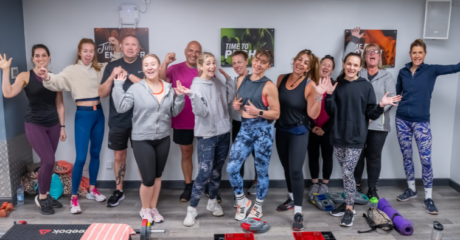
Check out our brand-new video series, featuring Head Coach Chris Smith from our CrossFit SCL box, as he demonstrates the correct technique to help you get the most out of your favourite gear and elevate your workouts.
Watch the videos below for expert tips and tricks, and let us know what you’d like to see added to the series as we go along!


Technique Tuesday video series

There are several variations, including the Russian KB swing, American KB swing, and the bent-arm KB swing.

1. Russian Kettlebell Swing:

  • Range of Motion: The KB is swung only to chest or shoulder height.
  • Movement Focus: Hinge at the hips, engage the glutes and hamstrings, and generate power from the lower body. The arms act as a guide rather than lifting the bell.
  • Benefits: Emphasizes posterior chain development, reduces shoulder strain, and allows for heavier loads.
  • Common Use: Strength training, power development, and general conditioning.

2. American Kettlebell Swing:

  • Range of Motion: The KB is swung all the way overhead, finishing in a locked-out position.
  • Movement Focus: Similar to the Russian swing, but with an additional shoulder and upper back engagement to raise the bell overhead.
  • Benefits: Increases range of motion, engages more upper body muscles, and enhances endurance.
  • Common Use: Popular in CrossFit workouts due to its full-body engagement.

3. Bent-Arm Kettlebell Swing

  • Variation: Instead of keeping the arms extended, the elbows bend slightly during the upward phase.
  • Purpose: This can increase upper body involvement, particularly in the biceps, shoulders, and upper back.
  • When to Use: Sometimes used for strongman-style training or to add a biceps isometric hold to the movement.
  • Considerations: Keeping the arms too bent can turn the movement into more of a “curl” rather than a swing, reducing power output from the hips.

Key Differences Between Russian and American Swings:

  • Range: Russian swings stop at chest level; American swings go overhead.
  • Shoulder Involvement: American swings require more shoulder mobility and stability.
  • Load: Russian swings allow for heavier weights since the range is shorter.
  • Risk: American swings may increase the risk of shoulder injury if mobility or control is lacking.

The deadlift is a compound strength-training exercise where you lift a loaded barbell or other weight from the ground to hip level and then lower it back down. It primarily targets the posterior chain, including the glutes, hamstrings, lower back, and traps, but also engages the core and grip strength.

How to Perform a Deadlift (Conventional Style)

  1. Starting Position: Stand with your feet hip-width apart, toes under the barbell.
  2. Grip the Bar: Bend at the hips and knees, keeping your back straight, and grip the bar just outside your knees (either overhand, mixed, or hook grip).
  3. Set Your Posture: Keep your chest up, back neutral, and engage your core.
  4. Lift the Bar: Drive through your heels, extend your hips and knees simultaneously, and keep the bar close to your body.
  5. Lockout: Fully extend your hips and knees at the top, standing tall.
  6. Lower the Bar: Hinge at the hips and control the descent, lowering the bar back to the ground.

Deadlift Variations

  • Sumo Deadlift: Wider stance, hands inside the knees; emphasizes glutes and quads.
  • Romanian Deadlift (RDL): Focuses on hamstring stretch with minimal knee bend.
  • Trap Bar Deadlift: Uses a hexagonal bar for a more upright posture.
  • Deficit Deadlift: Performed from an elevated surface to increase range of motion.
  • Snatch-Grip Deadlift: Uses a wider grip, engaging more upper back and traps.

The deadlift is a key exercise for building strength, athleticism, and overall power, but proper form is essential to prevent injuries.

Box squats
With the increase of power racks at our gyms, it’s the perfect time to focus on this effective squat variation. The box squat involves sitting back onto a box or bench before powering up again, and it’s an incredible tool for improving squat mechanics, boosting strength, and increasing range of motion.
 

Whether you’re looking to refine your form, build serious leg strength, or enhance explosiveness, box squats are your go-to!

Here are some key tips to perform them correctly:

Setup

  1. Box Height: Choose a box or bench that allows your thighs to reach parallel to the ground when seated. You can adjust the height based on your mobility and goals.
  2. Bar Position: Set up the barbell as you would for a regular squat (either high-bar or low-bar position).
  3. Foot Placement: Stand slightly wider than shoulder-width apart, with toes slightly pointed out.

Execution

  1. Engage Core: Brace your core and keep your chest up before descending.
  2. Hinge Back: Push your hips back first, then bend your knees to lower yourself onto the box.
  3. Control the Descent: Lower yourself under control until you are fully seated on the box, but do not relax your muscles. Maintain tension in your core and legs.
  4. Pause Briefly: Pause for about a second on the box without bouncing. This removes momentum and forces you to generate power from a dead stop.
  5. Explosive Drive Up: Push through your heels, engage your glutes and hamstrings, and drive up to a standing position. Keep your chest tall and avoid leaning too far forward.

Common Mistakes to Avoid

  • Relaxing on the Box: Stay tight and engaged (don’t collapse).
  • Bouncing Off the Box: The movement should be controlled, not a “touch and go.”
  • Not Hinging Enough: Ensure you’re initiating with the hips, not just bending at the knees.
  • Using the Wrong Box Height: A box that’s too high won’t challenge depth, while one that’s too low may compromise form.

Benefits of Box Squats

Box squats offer several benefits, making them a valuable addition to a strength training program.

Here are some key advantages:

  1. Improved Form & Mechanics – Box squats encourage proper squat mechanics by reinforcing sitting back into the squat rather than just dropping down, reducing knee stress.
  2. Increased Posterior Chain Activation – They place greater emphasis on the glutes, hamstrings, and lower back compared to regular squats.
  3. Enhanced Power & Speed – The pause on the box eliminates the stretch reflex, forcing you to generate more power from a dead stop, which is beneficial for athletes.
  4. Reduced Joint Stress – By controlling the descent and stopping at the box, box squats reduce strain on the knees and lower back, making them safer for some lifters.
  5. Depth Control & Consistency – The box ensures you squat to the same depth every time, helping improve squat depth consistency.
  6. Increased Confidence Under Heavy Loads – Knowing you have a set stopping point can build confidence when lifting heavier weights.
  7. Great for Rehabilitation – Since they allow controlled movement and reduce knee stress, box squats can be useful for those recovering from injuries.

Wall ball is a functional exercise that combines a squat with an explosive throw of a weighted medicine ball against a wall. Here’s the basic technique:

  1. Start Position – Stand facing a wall, about arm’s length away, with feet shoulder-width apart. Hold a medicine ball at chest level with both hands.
  2. Squat – Lower into a deep squat by bending your knees and pushing your hips back while keeping your chest up.
  3. Explosive Throw – As you rise from the squat, use your legs and arms to powerfully throw the ball upward to a target on the wall (usually around 8–10 feet high).
  4. Catch & Repeat – Catch the ball on the way down, absorb the impact by lowering into another squat, and immediately repeat the movement.

This exercise improves strength, endurance, and coordination, commonly used in CrossFit, HYROX and functional fitness training.

Scale the movement:

  1. Reduce the weight of the ball or the height of the target.
  2. Think about adapting the apparatus.  Dumbbell, weighted plate, kettlebell etc…(obviously remove the requirement of a target.
  3. Perform a Thruster (Front Squat + an Overhead Press).
  4. Squat to a bench or a box if building range of motion.

This is a total body movement with a number of benefits including strength, endurance and co-ordination.  Here are some key advantages:

  1. Full body workout – which engages multiple muscle groups.
  2. Improve cardiovascular endurance – the continuous movement of squatting and throwing elevated heart rate.
  3. Enhances co-ordination and balance – improves balance and athletic performance.
  4. Boost explosive power – Great for developing explosive movements, which benefit sports and functional fitness.
  5. Burns calories – can aid in weight loss and strength gain.
  6. Improves core stability – core engagement throughout the movement, to assist in midline stabilisation.

Beginners – focus on development of the movement, by performing a set amount of repetitions to a comfortable range.

Intermediate – once you have the form and mechanics of the movement, EMOM’s are a great way to build repetitions i.e. every minuet for 10:00 perform 10+ Wall Ball Shots.

Advanced – try adding Wall Ball Shots to a workout to increase the complexity of your training, i.e. completing a set amount of calories on an Assault Bike, followed by a set number of Wall Ball shots.

Here’s Head Coach at our CrossFit SCL box, Chris Smith demonstrating an Alternating Dumbbell Power Snatch.

This week we look to integrate a new movement to compliment last weeks Ski-Erg video, in the hope of creating a new workout or simply adding to your existing programme.

  1. Alternating DB Power Snatch
    • From the floor, the dumbbell is lifted explosively to an overhead position in one motion.
    • Power is generated by extending the hips, knees, and ankles.
    • The dumbbell is alternated between hands on each rep.
  2. Alternating DB Muscle Snatch
    • Similar to the Power Snatch but without a dip under the dumbbell.
    • The movement relies entirely on pulling the dumbbell overhead with straight hips and legs, using upper-body strength.
    • Alternate hands on each rep.
  3. Alternating DB Hang Power Snatch
    • The dumbbell starts from a “hang” position (off the ground, usually at the thighs).
    • Explosively drive the dumbbell overhead while dipping slightly under it at the top.
    • Alternate hands after each rep.

I have put together 3 levels including beginner, intermediate and advanced workout options:

  1. Beginner
    • Complete 5 rounds for time
    • 10 Alternating Hang Power Snatch (light DB)
    • 8/6 Calorie Ski-Erg
  2. Intermediate
    • Complete 7 rounds for time
    • 10 Alternating Power or Muscle Snatch (moderate DB)
    • 10/8 Calorie Ski-Erg
  3. Advanced
    • Complete 10 rounds for time
    • 10 Alternating Power or Muscle Snatch (heavy DB)
    • 12/10 Calorie Ski-Erg

Please note that due to the nature of the movements and the fact that they feature back to back the intensity of the planned workouts are high.  So please add rest in between sets to lower the intensity and to make it more manageable.

Welcome to our new series demonstrating how to use some of your favourite kit and get the most out of your workouts. Using the C2 Ski-Erg effectively requires proper technique, efficient breathing, and tailored warm-ups.
Here are some tips to help you make the most of your session!

Using the C2 Ski-Erg effectively requires proper technique, efficient breathing, and tailored warm-ups / workouts.

Here are some tips to help you make the most of your sessions:

1. Master the technique

Proper stance: Stand with feet shoulder-width apart, knees slightly bent, and core engaged.

  • Grip the handles correctly: Use a relaxed grip to avoid fatigue in your hands and forearms. Your thumbs should wrap around the handles, and wrists should stay straight.
  • Pull in a fluid motion: Start with your arms, then engage your core, and finish with a strong pull using your lats and legs. Keep the movement smooth and controlled.
  • Full Range of motion: Extend your arms fully at the top and finish the pull near your thighs or knees.
  • Don’t over-bend your knees: Avoid squatting excessively—it wastes energy. A slight hinge at the hips is sufficient.

2. Focus on breathing

  • Coordinate your breathing with your strokes:
  • Inhale during the recovery (as the handles move back up).
  • Exhale during the pull.

3. Use the damper setting wisely

  • Adjust according to your fitness level: A higher damper setting provides more resistance but requires more strength. Beginners should start at a moderate level (3–5) and adjust as they build strength.
  • Focus on stroke efficiency: Don’t equate higher resistance with a better workout. Instead, aim for consistent and powerful strokes.

4. Monitor key metrics

  • Stroke rate (SPM): Find a sustainable rhythm, usually between 30–40 SPM, depending on your fitness goals.
  • Split time: Keep an eye on your 500m split time to gauge intensity and pace.
  • Heart rate: Use a heart rate monitor to ensure you’re training in the desired zone (e.g., fat-burning, aerobic, or anaerobic).

5. Warm up and cool down

  • Spend 5–10 minutes warming up at a low intensity to prepare your muscles and joints.
  • Cool down with light strokes to bring your heart rate back to normal and reduce muscle stiffness.

6. Plan wour workouts

  • Intervals: Alternate high-intensity efforts (e.g., 30 seconds hard, 1 minute easy) for cardiovascular and muscular endurance.
  • Steady state: Maintain a moderate pace for 10–30 minutes to build aerobic capacity.
  • Pyramid workouts: Gradually increase and then decrease intensity to challenge your stamina and recovery ability.

7. Engage your core

  • Use your abdominal muscles to generate power during the pull. A strong core reduces strain on your lower back and improves overall efficiency.

8. Stay hydrated and maintain posture

  • Hydrate before, during, and after your workout.
  • Keep your chest lifted and shoulders relaxed to avoid unnecessary strain.

9. Regularly check your form

  • Consider filming yourself or working with a coach to refine your technique and eliminate bad habits.  I did this during the video and noticed I’m pulling slightly lower than required.  This form of reflective practice is very beneficial for form and technique development.

10. Incorporate Ski-Erg into a broader training programme

  • Use it as a warm-up, a main workout, or a finisher.
  • Combine it with other exercises like rowing, biking, or strength training for a balanced fitness routine.

Sample beginner interval workout:  A great way to build over capacity is to utilise an EMOM (Every min on the min!)

  • Workout:
    • 30 seconds effort – Aim to achieve a set calorie goal of 8/6 cals
    • 30 seconds easy recovery.
    • Repeat for 5:00

Advanced challenge:

  • Workout:
    • 30 seconds effort – Aim to achieve a set calorie goal of 12/10 cals
    • 30 seconds easy recovery.
    • Repeat for 10:00

Let us know how you get on @sclmembers

Whether you’re a Sled Track expert or just beginning to explore this equipment, our gyms in Broughton and Eccles now feature the Sled Track.

Its growing popularity stems from its ability to offer a comprehensive full-body workout, combining both cardio and strength training.

The Sled Track is becoming an increasingly popular piece of equipment featuring in Hyrox tournaments as a key component. The sled provides an efficient full body workout, great for incorporating both cardio and strength into your workout, and it’s totally scalable – so if you’re a newbie or a pro then by simply adjusting the weight it’s suitable for all levels.

If you want to give it a try, but don’t really know how to use it or how best to add it into your workout routine, then here’s a few pointers and exercises from Chris Smith, Head Coach at CrossFit SCL.

‘Always warm up! Adjust the weight accordingly to customise your workout. So if you’re new to the Sled, please start with a lighter weight and focus on technique.  Once you have the proper mechanics set, you can then gradually build weight as you progress’.

PUSH Exercises

Stand behind the sled and grab the poles with a high-grip hand position. Engage your core muscles and start pushing the sled, powering through your entire leg. Extend your hips and knees as you move the sled forward. Your foot stance should resemble your natural running position.

Body position is key – I would always recommend a bent arm starting position with your shoulders towards the handles, almost like your set for a scrum.  Ultimately, this technique will give you the best control over the sled, as well as the ability to build more momentum, whilst maintaining the best lumbar position.  Stay low at the start and engage the core, locking the upper body in to a powerful position.  Start with smaller steps to get the sled moving before switching your stride length.

  • Do this for 1 minute.
  • Rest for 30–60 seconds.
  • Repeat a 1-minute push and a 30-second rest 5–10 times

Another option would be to do this EMOM Style (Every min on the min) to build progressive strength and fitness.

  • Beginner:  Start by completing 1 x 10m Push then rest for the remainder of the min (repeat this for 5-10 mins).
  • Intermediate: 2-3 Sled Pushes
  • Advanced:  4+ Sled Pushes

PULL Exercises

Grab the rope with both hands to initiate the pull, with your feet within the width of the sled.  The goal is to pull the sled to the end of the sled track and once you pull the entire sled past the mark, switch sides and pull it back.  Maintain an upright posture throughout the movement and avoid sitting or kneeling while pulling the sled, as this will reduce momentum making the pull more difficult.

Decide what it is your looking to train? i.e Biceps / Back = sink low and adapt a hand over hand pull, with a long reach.  Hamstrings and glutes = upright posture, take grip and walk the sled back within the allocated area, before regripping the rope and repeating the process.

As you get stronger, add weight in small increments. Enjoy the positive impact on your strength, endurance, and overall wellbeing!’

View our Sled Track demo:

Share Article

section heading shape Related News